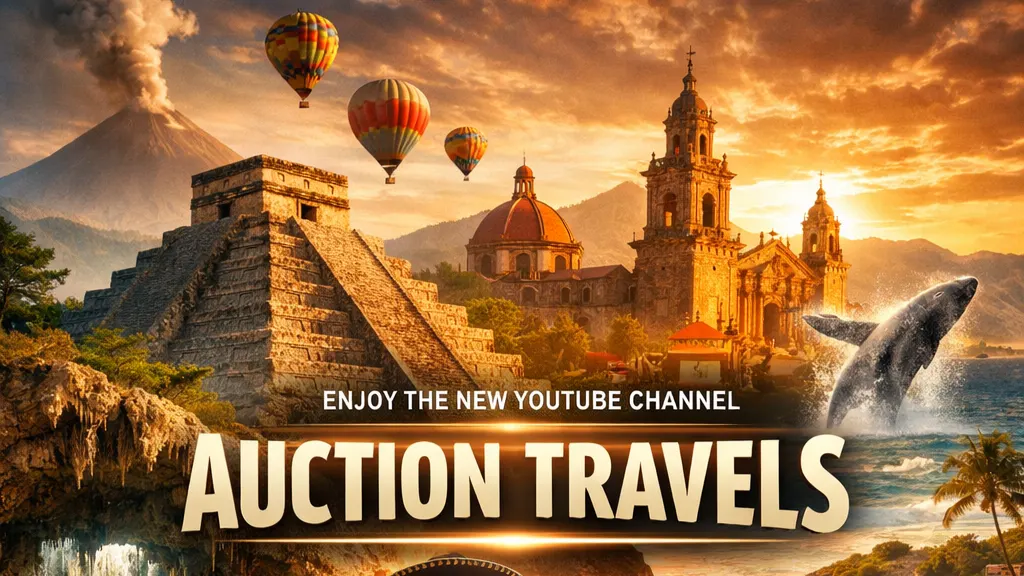
Mexico, meanwhile, delivers unmatched variety within a single destination—a quality that makes it endlessly compelling to donors who crave both novelty and substance. Auction Travels highlighted Guadalajara among 2026's top destinations, while surges in interest across Tulum and Puerto Vallarta reflect Mexico's broad and growing appeal. From the ancient ruins of the Yucatán to the cobblestone streets of San Miguel de Allende, from mezcal distilleries in Oaxaca to vibrant street markets brimming with handmade textiles and regional flavors, Mexico offers layers of discovery that feel authentic rather than curated for tourists. The country's culinary scene alone—recognized globally as a UNESCO Intangible Cultural Heritage—provides a gateway into regional identity, history, and craft. For adventurous donors, Mexico represents the rare combination of accessibility and depth: close enough for a long weekend, rich enough for weeks of exploration.
What makes these destinations particularly powerful at fundraising events is the psychological alignment they offer. Risk-takers and adventurers don't bid on travel packages simply to check a box or post a photo—they bid because they see the experience as an extension of their identity. They value cultural immersion over insulation, active participation over passive consumption, and the kind of travel that challenges perspective rather than confirming it. Costa Rica and Mexico deliver on all of these fronts, and donors recognize it immediately. These packages consistently inspire competitive bidding across live, silent, and buy-now auction formats, not because they're the most expensive options, but because they promise the most meaningful engagement. When positioned thoughtfully—emphasizing adventure, authenticity, and the opportunity for genuine connection—these destinations become magnets for your most engaged, values-driven donors. meanwhile, offers a different but equally compelling narrative around cultural preservation and economic empowerment. In regions like Oaxaca, Chiapas, and the Yucatán, indigenous and artisanal communities have maintained traditional practices—weaving, pottery, natural dyeing, mezcal production—for generations, often in the face of economic pressure to abandon them for more profitable but culturally disconnected work. Thoughtfully structured travel experiences create direct economic support for these communities, allowing artisans to sustain their craft, pass knowledge to the next generation, and maintain cultural identity. When donors visit a Zapotec weaving cooperative, purchase textiles directly from the women who made them, or stay in community-run eco-tourism projects, they're participating in a model that values cultural continuity over homogenization. The impact is tangible: families can afford to keep children in school while teaching them ancestral skills; communities gain leverage to resist exploitative labor practices; and traditions that might otherwise disappear find renewed viability. Mexico's culinary heritage—recognized by UNESCO—offers another dimension of this dynamic, where farm-to-table experiences and regional food tours support small-scale farmers, preserve heirloom crops, and honor cooking techniques that connect contemporary Mexicans to pre-Columbian roots. For socially conscious donors, Mexico represents the possibility that tourism can be a force for cultural resilience rather than erosion.